
Solar Street Light Price in Kerala: What Affects Cost
What decides the price of a solar street light in Kerala: lumens, battery, panel, pole, installation and monsoon design. Learn how to compare quotes.
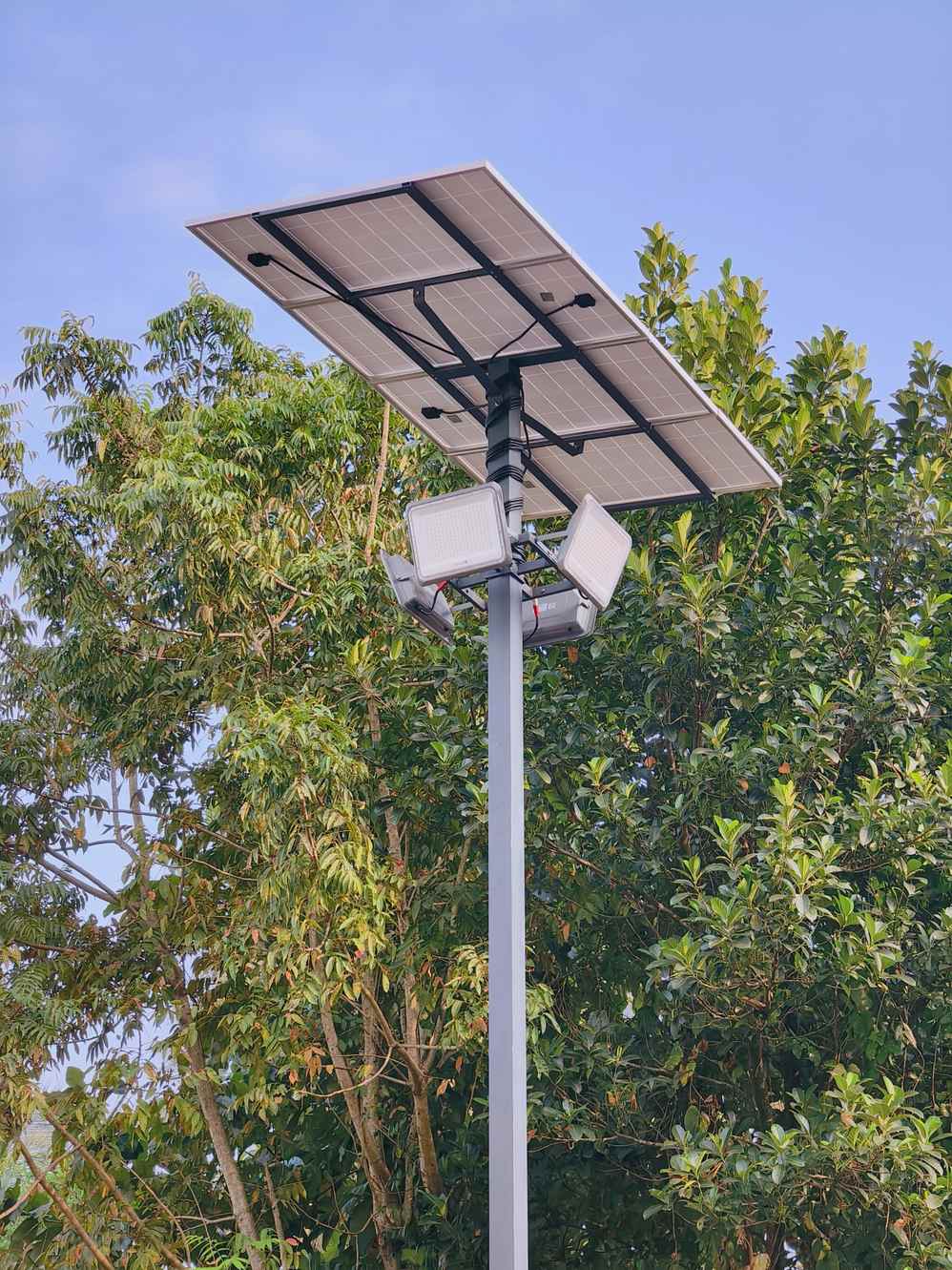
The short answer
There is no single price for a solar street light in Kerala. Two lights that both say "60W" can differ in price by several times, because the label on the box says little about how much light you get, how long the battery lasts, or how the fixture survives monsoon and coastal air.
FRK Lighting's price depends on the model, the number of lights, the pole height and whether installation is included. We give an itemised quotation after a free site assessment, with no hidden charges. Send us your location and requirement on WhatsApp (+91 70258 88461) and we will recommend a model and quote for it. The rest of this guide explains what moves the price up or down, so you can compare any quote fairly.
Why prices you see online vary so much
On B2B marketplaces in November 2026, listings for similar-looking all-in-one solar street lights ranged from a few thousand rupees to well over ₹30,000 per unit. Those are advertised prices, not quotes, and many do not say what is included. The gap usually comes from the factors below.
1. Real light output (lumens), not the watt label
A "60W" or "120W" label often describes the claimed power of the panel or LED, not the light that reaches the road. Ask for lumens and the light distribution (how the beam spreads along the road). Higher real output costs more because it needs better LEDs, optics and a bigger panel and battery behind them.
For reference, the FRK 600W-S1 is rated at about 2,178 lumens with a 60W monocrystalline panel. Ask us if you want to know how a model's name relates to its panel and light output.
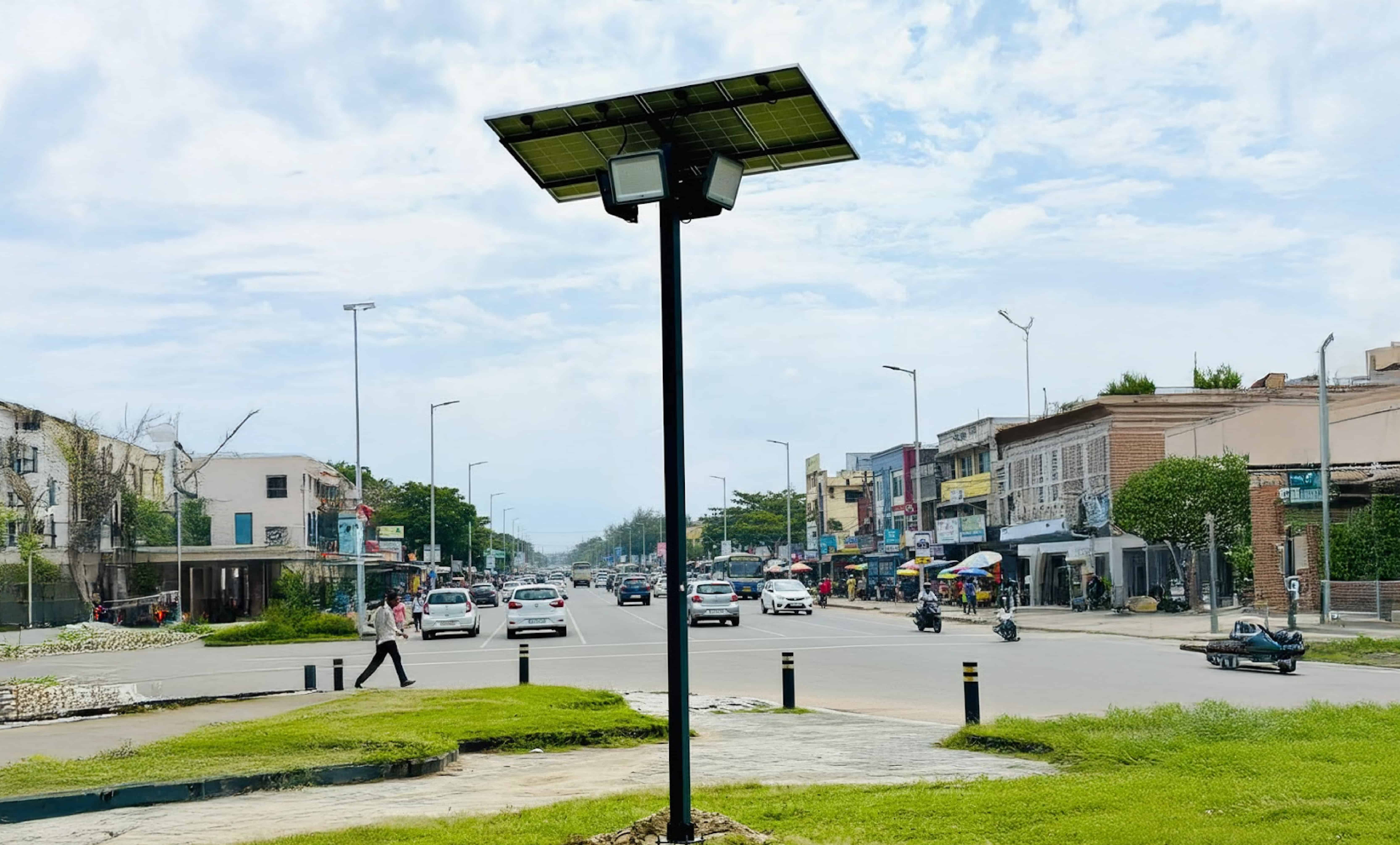
Not sure how many lights or what size your road needs? Read how to size a solar street light for your road (see the blog: "How to size a solar street light for your road").
2. Battery type and size
The battery is usually the biggest cost inside the fixture and the part that decides how many years the light works.
- LiFePO4 (lithium iron phosphate) lasts longer and handles heat better than ordinary lithium-ion or lead-acid, and costs more up front.
- Capacity decides how many hours the light runs and how many cloudy days it survives. The 600W-S1 uses a 60,000 mAh LiFePO4 battery with about two days of rainy-day backup.
A cheap light with a small or low-grade battery is often the one that goes dark in July. More on this in the blog post "Why LiFePO4 batteries are essential for Kerala solar lights".
3. Solar panel size and quality
Monocrystalline panels give more power from the same area than polycrystalline ones. A larger panel charges the battery faster on weak-sun days, which matters in Kerala's monsoon. More panel means more cost.
4. All-in-one or split type
- All-in-one: panel, battery, LED and controller in one fixture. Faster to install and usually cheaper per light.
- Split type: the panel is separate from the lamp, with the battery in a box on the pole. Costs more, but suits sites with shade, where the panel can be placed in the sun and the lamp where light is needed.
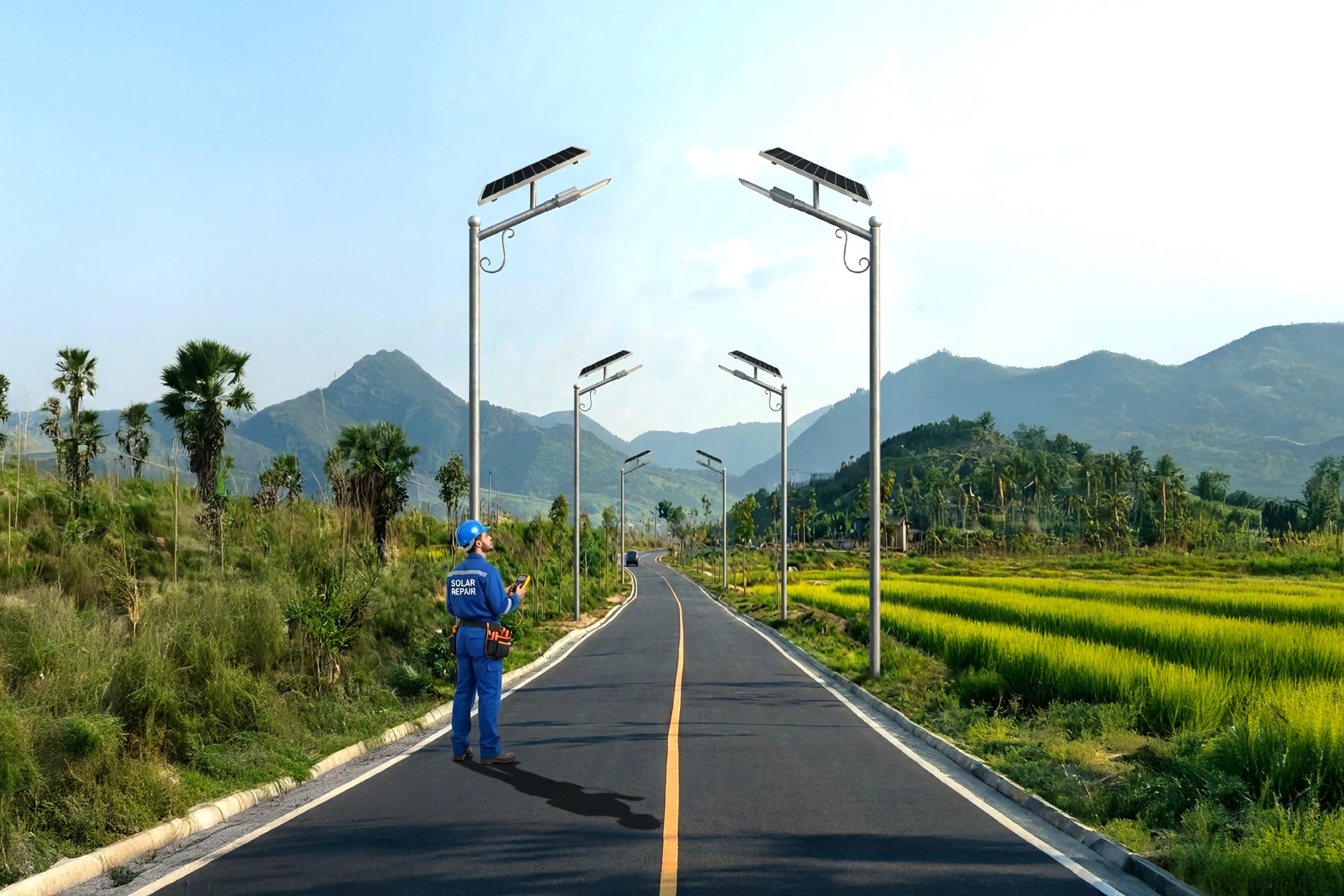
See our comparison in the blog post "All-in-one vs Split-type solar lights: Which to choose?".
5. Controller and lighting profile
A good controller protects the battery and adjusts brightness through the night. For example, the 600W-S1 runs at 100% for the first six evening hours and then drops to 80% until sunrise. Motion sensing and dimming add cost but extend battery life.
6. Build quality, IP rating and certification
- IP rating shows protection against dust and water. FRK's 600W-S1 is IP67.
- Certification matters most for panchayat and government work. The 600W-S1 lists IS 15885, IS 16104 and IEC 62384. Ask any supplier for test reports, not only a logo.
- Material and finish: powder-coated or anodised aluminium and galvanised poles resist corrosion in Kerala's humid and coastal air.
7. Pole, foundation and installation
The light is only part of the project. Add:
- Pole height (5 to 6 m is typical for the 600W-S1)
- Foundation and civil work
- Transport and labour
- Wiring, earthing and commissioning for split systems
Always ask whether a quote is for the fixture only or supply and installation. See the Installation Services page for how FRK installs.
8. Quantity and type of buyer
A panchayat, an estate or a factory ordering 50 lights gets a better rate per light than a homeowner buying 2. Government work through ANERT or local self-government institutions follows empanelment and tender rules, which affect both price and specifications.
9. Warranty and maintenance
Check the warranty on the battery, the panel and the fixture separately, and whether an annual maintenance contract is available. A longer battery warranty usually means a higher price and a lower lifetime cost.
Kerala-specific factors
- Monsoon: several cloudy days in a row mean you need extra battery capacity and a larger panel. Design for the worst month, not the best.
- Coastal air: near the sea, corrosion protection and a high IP rating are not optional.
- Shade: coconut and rubber trees can block a panel. This can make a split system worth the extra cost.
- Theft and damage: pole height and mounting design affect how safe the fixture is.
Cheapest is not the lowest cost
Look at cost over 5 to 8 years, not the day-one price. A light with a weak battery may need replacing in 2 years. A light with a proper LiFePO4 battery and a good controller may run for many years with little maintenance. Count the replacement and the callout cost when you compare.
Checklist for comparing quotes
- Lumens and beam pattern: the real light on the road
- Panel wattage and type: charging in monsoon
- Battery chemistry, capacity, backup days: lifespan and reliability
- IP rating, certifications, test reports: durability and tender eligibility
- Pole height, foundation, installation included?: the true project cost
- GST included?: avoids surprises
- Warranty and maintenance terms: lifetime cost
- Similar installations in Kerala: proof it works here
How to get an accurate quote from FRK
Send us these details on WhatsApp and we will reply with a recommended model and a price:
- Location (district and place) and type of site: road, estate, car park, yard, campus, farm or resort
- Number of lights needed and the distance between poles
- Road or area width
- Hours of lighting needed
- Whether a pole and installation are needed
- Photos of the site, if you have them
Call or WhatsApp: +91 70258 88461
Frequently asked questions
How much does a solar street light cost in Kerala?
Prices vary widely with lumens, battery, panel, pole and installation. FRK quotes each project after a free site assessment, so the price matches your site. Compare quotes using the checklist above.
Is an all-in-one solar street light cheaper than a split type?
Usually yes, because it is quicker to install and has fewer parts. Split type can be worth the cost where there is shade.
How long does the battery last?
It depends on battery chemistry, how deeply it is discharged and the climate. LiFePO4 batteries generally last longer than ordinary lithium-ion or lead-acid batteries. FRK gives warranty terms for the battery in every quotation.
Does a solar street light work in the monsoon?
Yes, if it is designed for it. Look for extra battery capacity and a stated number of backup days. The 600W-S1 offers about two days of rainy-day backup.
Do I need certification for panchayat work?
Government and local-body projects usually require tested, certified products. Ask for IS 15885, IS 16104 and IEC 62384 test documents, and check ANERT empanelment rules for the project.
Solar Street Light Installation in Kerala: Step by Step
Next ArticleHow to size a solar street light for your road
Related Articles
How to size a solar street light for your road
The four key measurements that decide whether a solar light lasts all night through monsoon conditions.
All-in-one vs Split-type solar lights: Which to choose?
Both convert sunlight into light, but differ in installation simplicity, autonomy, and panel capacity.
Why LiFePO4 batteries are essential for Kerala solar lights
Understanding heat tolerance, cycle life, and depth of discharge for tropical solar installations.